
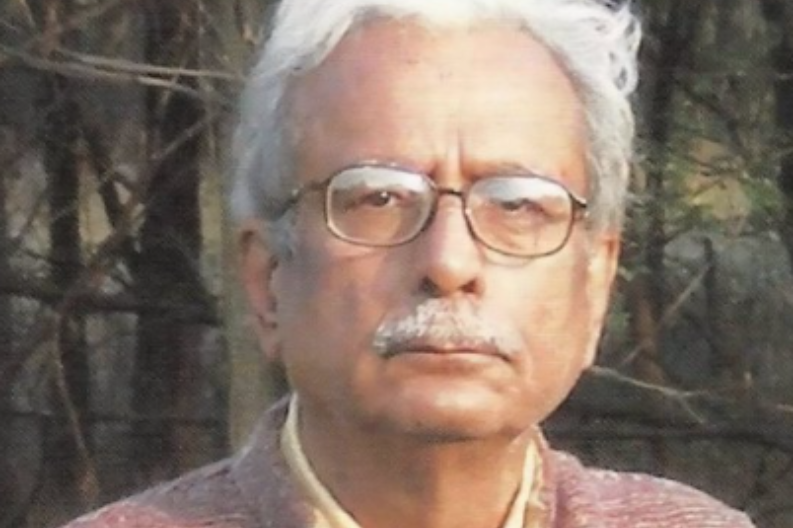
Renowned Hindi writer and Jnanpith Awardee Vinod Kumar Shukla passed away in Raipur, Chhattisgarh, leaving an irreplaceable void in Indian literature. Moreover, Prime Minister Narendra Modi expressed deep condolences, stating that Shukla will always be remembered for his invaluable contribution to Hindi literature.
A Literary Journey Spanning 65 Years
Born on January 1, 1937, in Rajnandgaon, Chhattisgarh, Shukla’s literary journey began in childhood. Furthermore, he grew up in a joint family after losing his father early in life. His mother, who brought Bengali culture from Jamalpur (now in Bangladesh), introduced him to writers like Rabindranath Tagore and Sharat Chandra.
Major Works and Recognition:
| Category | Notable Works |
|---|---|
| Poetry Collections | “Almost Jai Hind” (1971), “Nothing Extra”, “The Sky Knocks the Earth” |
| Novels | “Naukar Ki Kameez” (1979), “Khilega To Dekhenge”, “Deewar Mein Ek Khidki Rahti Thi” |
| Children’s Books | “Green Grass Thatched Hut”, “Gamle Me Jungle”, “Yasi Rasa Ta” |
| Awards | Jnanpith Award, Sahitya Akademi, Asia’s first PEN Nabokov Award |
Interestingly, his novel “Naukar Ki Kameez” marked a turning point in Hindi literature. Subsequently, filmmaker Mani Kaul adapted it into a celebrated film.
The Muktibodh Connection
The legendary poet Gajanan Madhav Muktibodh played a crucial role in Shukla’s career. Indeed, Muktibodh first introduced Shukla’s eight poems to magazine editor Shrikant Verma, which became his “first poem” publication.
Shukla often recalled meeting Muktibodh in Rajnandgaon during twilight. “Muktibodh came with a burning lamp,” he remembered. “It felt like a dog walking with its tail wagging behind someone.”
Writing Philosophy: Always the First Poem
Despite writing for over six decades, Shukla maintained a unique perspective. “Whenever I write a new poem, I write it like my first poem,” he explained. Moreover, he believed, “No writer ever writes his best in his life. The best is always left to be written.”
Consequently, this philosophy kept his writing fresh and original throughout his career.
Transforming the Ordinary into Extraordinary
Shukla possessed a rare gift-making everyday scenes extraordinary. Additionally, he never used full stops in his poems because they suggested nothing remained to be said. Therefore, his writing always implied continuation, not endings.
His works blended reality with magical elements so seamlessly that readers couldn’t separate them. For instance, in “Deewar Mein Ek Khidki Rahti Thi,” the protagonist rides an elephant to college with a sadhu-something Shukla himself actually did during his working days at Raipur’s Agricultural University.
Social Conscience in Literature
Furthermore, Shukla wrote extensively about tribal rights, farmer suicides, and Naxalite conflicts. However, he avoided statistics and slogans. Instead, his humanitarian approach made marginalized voices heard through poetry and stories.
His poem “Adivasi! Haanka Pada Hai” powerfully captured tribal displacement and state violence. Similarly, he questioned why those with nothing to hide face the most suspicion.
Final Days and Legacy
Remarkably, at nearly 90, Shukla wrote four stories last month. Even while hospitalized at AIIMS Raipur on December 2, he continued writing. Indeed, a week after admission, he composed another poem.
His house in Raipur, once witness to extraordinary interpretations of ordinary life, now stands empty. However, his translations into numerous languages-from English to Hebrew-ensure his voice reaches across borders.
Vinod Kumar Shukla leaves behind a literary legacy that taught generations how to find magic in everyday moments and humanity in the simplest gestures.