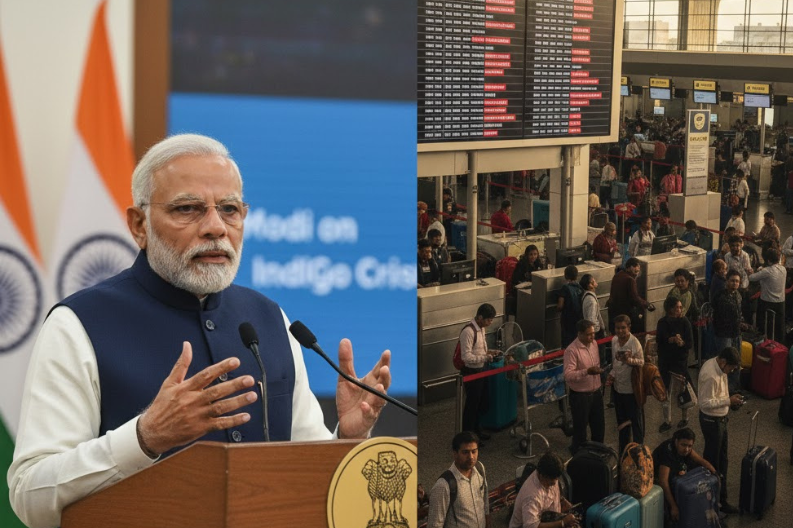
PM Modi on IndiGo Crisis delivered strong remarks during Wednesday’s NDA lawmakers meeting, emphasizing that government regulations must not cause hardship to Indian citizens. Specifically, Parliamentary Affairs Minister Kiren Rijiju shared the Prime Minister’s comments addressing the recent IndiGo flight cancellation chaos. Moreover, PM Modi stressed that rules should improve systems rather than harass the public. Consequently, his statement signals a balanced approach between airline accountability and passenger protection.
PM’s Key Message
Prime Minister Modi clearly outlined the government’s responsibility toward citizens. “Rules and regulations are good, but they should be used to improve the system, not harass the public,” he stated. Furthermore, he emphasized ensuring no Indian faces hardship simply because of their citizenship. Therefore, regulators must balance safety requirements with practical implementation.
Government’s Strict Response: Civil Aviation Minister Rammohan Naidu promised to make an example of IndiGo. The government plans strict action against the budget airline for its management failures. Additionally, officials warned other airlines about potential consequences for non-compliance.
| Impact Metrics | Numbers |
|---|---|
| Flights Cancelled | Over 4,500 in 7 days |
| Passengers Affected | 950,000+ bookings |
| Refunds Issued | Rs 830 crore+ |
| Market Value Lost | Rs 37,000 crore |
“We care for pilots, crew and passengers,” Minister Naidu told Parliament. “We will not take the situation lightly and will set an example for every airline.”
What Caused the Crisis?
IndiGo controls over 60% of India’s domestic aviation market. However, the airline failed to adapt to new DGCA regulations about pilot fatigue and workload management. These rules limit on-duty hours and mandate increased rest periods between flights.
New DGCA Regulations Include:
- Restricted flight duty time limitations
- Mandatory rest periods for pilots
- Crew scheduling requirements
- Fatigue management protocols
- Stricter roster management
Consequently, IndiGo couldn’t find enough pilots and cabin crew without violating the new rules. Therefore, the airline cancelled hundreds of flights daily, creating massive disruption across India.
Passenger Suffering: Social media is flooded with stories of stranded travelers. Many passengers faced family emergencies, medical situations, or other critical needs. Moreover, people shared photographs and videos showing airport chaos and frustration.
IndiGo offered full refunds with waived cancellation charges. However, processing 950,000 tickets created significant delays. Additionally, some passengers received incorrect refunds, adding to their frustration. Meanwhile, travelers scrambled to find alternative transportation during peak season.
Government Action Plan
Authorities summoned IndiGo executives for questioning. Similarly, officials are examining the airline’s crew management practices. Furthermore, investigators review whether IndiGo violated operational standards.
The government emphasizes several priorities:
- Protecting passenger rights
- Ensuring airline accountability
- Balancing safety with service
- Preventing future disruptions
- Setting industry standards
Additionally, regulators monitor other airlines to ensure they don’t face similar problems. Therefore, the aviation sector faces increased scrutiny going forward.
The IndiGo crisis highlights challenges in implementing new safety regulations. While pilot fatigue rules protect aviation safety, airlines must plan adequately. Moreover, better crew management systems could prevent such disruptions.
PM Modi on IndiGo Crisis statements emphasize the government’s commitment to citizen welfare while maintaining necessary regulations, ensuring future aviation rules balance safety requirements with passenger convenience and airline operational capabilities.