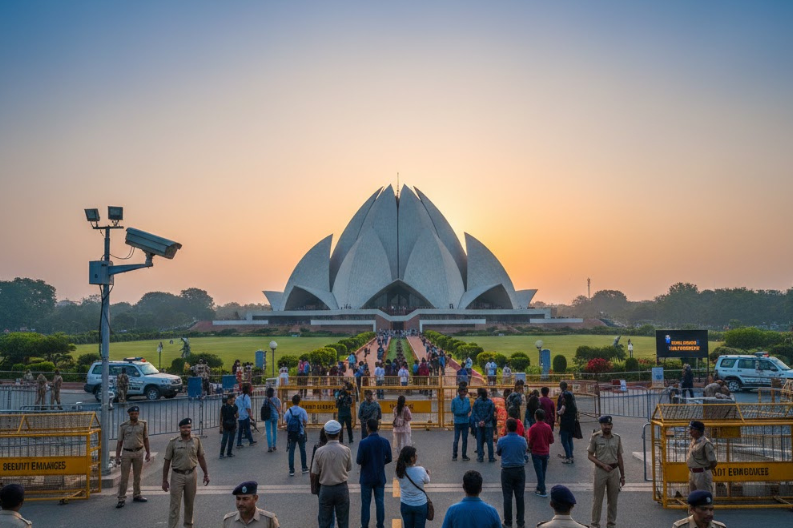
The lotus temple remains one of Delhi’s most visited landmarks, known for its peaceful atmosphere, unique design, and message of unity. Located in South Delhi near Nehru Place, the monument attracts visitors from across India and abroad. Even amid heightened security in the capital, the temple continues to welcome people of all faiths and backgrounds.
History and Vision
Completed in 1986, the temple serves as a Bahá’í House of Worship. The Bahá’í faith promotes unity among religions and humanity. Therefore, the site allows readings from all sacred texts, while avoiding sermons or religious symbols. Since its opening, millions of people have visited the temple, making it one of the most visited buildings in the world.
Education and Community Outreach
An education and information center near the temple runs programs for children, youth, and families. These initiatives promote values such as empathy, service, and social harmony. As a result, the temple functions not only as a spiritual space but also as a center for learning and community building.
A Symbol Beyond Religion
In conclusion, the lotus temple continues to stand as a global symbol of peace, unity, and thoughtful design. While security measures ensure visitor safety, the monument remains a calm space where people pause, reflect, and connect beyond religious boundaries.
Increased Security Deployment
Security has been strengthened at the Lotus Temple as Delhi authorities increased vigilance across prominent monuments following rising regional tensions. As visitor numbers usually grow during the day, police deployed additional personnel to manage crowds and ensure safety. Meanwhile, officials clarified that these steps are preventive and part of routine law-and-order measures.
Delhi Police and CISF personnel stepped up checks at the site from Friday morning. Officers focused on crowd movement, entry points, and surveillance. At the same time, police increased patrolling at nearby roads and in public spaces. As a result, visitors experienced tighter security but continued smooth access.
Citywide Safety Measures
Along with the monument, authorities raised security at Qutub Minar, India Gate, and other high-footfall locations. While India Gate remained calm early in the day, officers actively monitored the area to prevent overcrowding. Moreover, paramilitary commandos and SWAT teams carried out inspections in sensitive zones across New Delhi.
Metro Stations and Public Areas on Alert
Security agencies also enhanced vigilance at Metro stations with additional CISF deployment and extended CCTV monitoring. Furthermore, Bomb Disposal Squads conducted drills in busy markets and malls to check preparedness. Therefore, commuters and visitors were advised to remain alert and cooperate with security staff.
Architecture and Environmental Efforts
Apart from security updates, the monument continues to draw attention for its architecture and sustainability work. Nearly 25% of its electricity now comes from solar power. However, rising air pollution has caused visible marble discoloration, prompting ongoing monitoring and conservation planning.
The temple stands out for its architecture, inspired by the lotus flower, a symbol of purity and peace. It features 27 white marble petals arranged in nine sides, with nine doors opening into a large central prayer hall. Inside, the space remains free from idols, images, or rituals. As a result, visitors experience complete silence, which encourages meditation and reflection.
Visitor Experience and Guidelines
Despite heightened security, the site remains open to all visitors free of cost. Officials encouraged people to plan visits during non-peak hours and follow rules inside the prayer hall.
Visitor Information (2025):
| Category | Details |
|---|---|
| Entry Fee | Free |
| Summer Timings | 9:00 AM – 7:00 PM |
| Winter Timings | 9:00 AM – 5:30 PM |
| Nearest Metro | Kalkaji Mandir |
| Photography | Not allowed inside |
A Symbol of Peace Amid Vigilance
In conclusion, even with visible security arrangements, the Lotus Temple continues to represent unity, peace, and openness. While authorities remain alert, the monument stands calm, welcoming visitors in a secure and well-managed environment.