
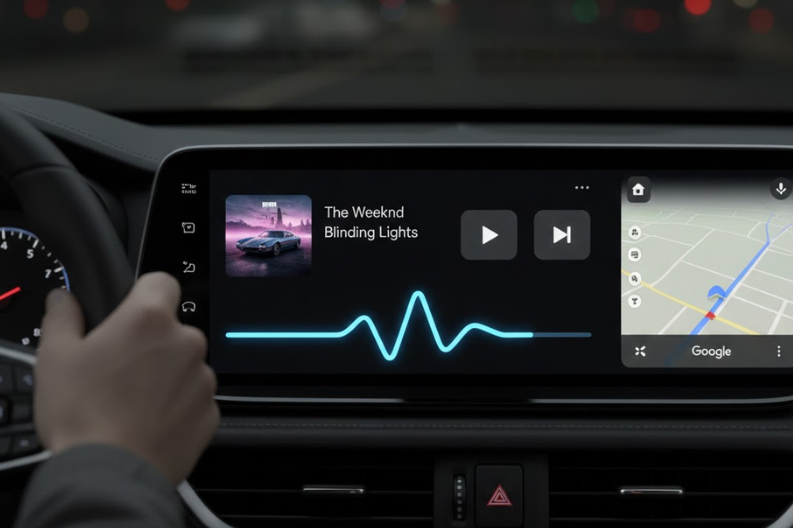
Google is testing an Android Auto wavy progress bar for its music player interface, marking a significant visual update for drivers. The tech giant replaces the current flat progress line with a dynamic, curved design. Moreover, this change aligns with Google’s Material 3 Expressive design language already present on Pixel devices.
Developers discovered the new feature in Android Auto version 15.9.655104. Furthermore, they managed to activate it early, revealing how the updated interface will look. The wavy design appears noticeably thicker and more animated compared to the existing straight line.
Key Design Changes:
| Current Design | New Design |
|---|---|
| Flat, thin line | Wavy, curved bar |
| Minimal visual presence | Dynamic, prominent appearance |
| Basic progress indicator | Expressive, animated element |
| Static appearance | Lively, engaging look |
The wavy progress bar brings several potential benefits for drivers. First, the thicker design makes it easier to see while focusing on the road. Additionally, the increased size could improve scrubbing functionality when users want to skip through songs or podcasts. Consequently, this might reduce the time drivers spend looking at their screens.
Why Google Makes This Update:
- Creates visual consistency across Android ecosystem
- Improves visibility during driving
- Reduces driver distraction time
- Aligns with Material 3 Expressive standards
- Modernizes the overall interface
Google has been working on several Android Auto improvements simultaneously. The company recently tested new media playback templates for apps like Spotify and YouTube Music. Similarly, they developed easier switching between different music applications. Therefore, the wavy progress bar represents just one part of a broader modernization effort.
The Material 3 Expressive design philosophy emphasizes personality and expressiveness in user interfaces. Meanwhile, it maintains functionality and clarity. This approach transforms simple UI elements into more engaging visual components without sacrificing usability.
Currently, the feature remains hidden in the code and hasn’t launched publicly. However, its presence in recent builds suggests Google plans to roll it out soon. The company typically enables such features through server-side updates, meaning users won’t need to download new app versions.
Expected Rollout Details:
- Feature found in Android Auto v15.9.6551
- Not yet enabled for public users
- Likely server-side activation coming
- No official announcement yet
- Timeline remains unconfirmed
Beyond the progress bar update, Android Auto v15.9 also hints at Google Cast support. Developers found code strings mentioning Cast functionality for cars. This makes sense since Android Automotive already supports Cast on some vehicles like Rivian. Additionally, Google previously teased video support coming to Android Auto.
The refreshed button designs accompany the wavy progress bar, appearing both in full music apps and the dashboard widget. These changes create a cohesive, modern look throughout the Android Auto experience.
Google hasn’t confirmed whether users can choose between flat and wavy designs. Nevertheless, the update focuses on reducing distraction while improving the visual appeal of everyday driving features.
The Android Auto wavy progress bar represents Google’s commitment to creating safer, more consistent experiences across their entire Android ecosystem while keeping drivers focused on the road ahead.