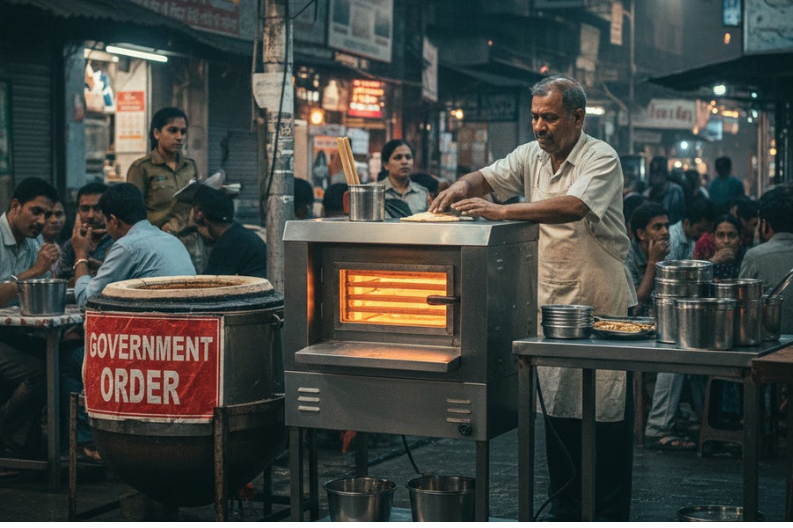
The Tandoor Ban In Delhi has come into force as the city struggles with rising air pollution. The Delhi government has ordered a complete ban on coal and firewood tandoors in all hotels, restaurants, dhabas, and street-side food joints. At the same time, authorities have stopped all kinds of open burning, including garbage burning, to reduce local pollution sources.
This order comes under the Air (Prevention and Control of Pollution) Act, 1981 and the Graded Response Action Plan (GRAP). As a result, all eateries must shift immediately to electric or gas-based tandoors. Officials believe this step will help lower harmful emissions during periods when air quality remains poor or critical.
Moreover, Delhi Chief Minister Rekha Gupta has announced a citywide ban on open burning. She has also given powers to district authorities and the Municipal Corporation of Delhi to impose fines of up to Rs 5,000 on those who break the rules. Meanwhile, she appealed to citizens to cooperate, saying even small efforts can bring big change.
Key Rules at a Glance
- Ban on coal and firewood tandoors
- No open burning of waste or garbage
- Mandatory switch to gas or electric tandoors
- Fines up to Rs 5,000 for violations
| Area | New Requirement |
|---|---|
| Restaurants & hotels | Use gas/electric tandoors |
| Street food joints | Stop coal/firewood use |
| All eateries | No open burning |
Meanwhile, the Delhi Pollution Control Committee (DPCC) has directed enforcement teams to inspect food establishments. These checks will follow the fuel list approved by the Commission for Air Quality Management (CAQM). Therefore, municipal bodies must ensure strict compliance across all areas of the city.
However, the ban has also created challenges for food businesses. Many restaurants depend on traditional tandoors for their signature smoky taste. As a result, owners are now testing new cooking methods, redesigning kitchens, or adjusting menus. Smaller eateries, especially those with limited space, may drop some tandoori items altogether.
On the other hand, health experts welcome the move. They say reducing smoke from coal and firewood can improve air quality and protect lungs, especially for children and elderly people. In addition, cleaner cooking methods may create safer working conditions for kitchen staff.
In conclusion, the Tandoor Ban In Delhi marks a strong step in the city’s fight against pollution. While the transition may be difficult for businesses, the government hopes this change will lead to cleaner air and better public health in the long run.