
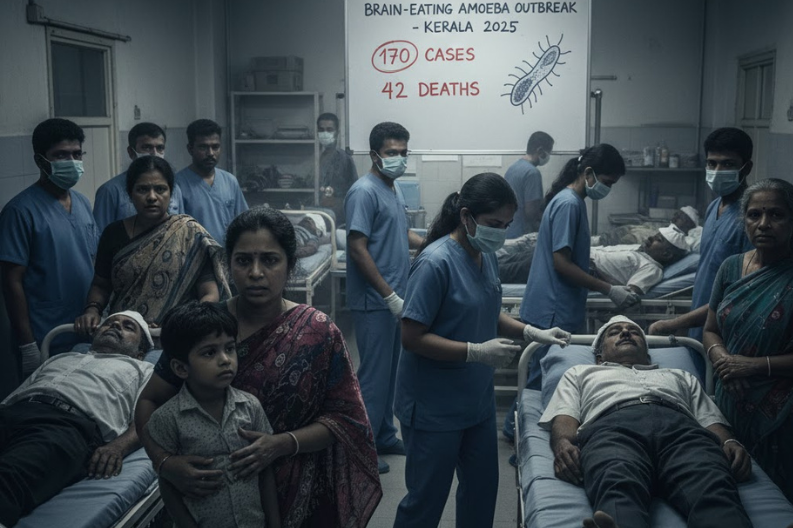
Kerala faces a serious health crisis as brain-eating amoeba infections continue to rise alarmingly. The Centre informed Parliament on Friday that the state reported 170 cases and 42 deaths in 2025 alone. This marks a dramatic increase from previous years, raising urgent public health concerns.
Kerala Reports Surge In Brain-Eating Amoeba Infections With 170 Cases, 42 Deaths This Year https://t.co/ZmA4IBhmeJ pic.twitter.com/ilT593cPUR
— NDTV (@ndtv) December 5, 2025
Union Health Minister Prataprao Jadhav provided these figures in a written reply to the Lok Sabha. Since 2023, Kerala has recorded a total of 211 cases and 53 deaths from this deadly infection. Moreover, the numbers show a disturbing upward trend that demands immediate attention.
Alarming Rise in Cases
The disease has spread rapidly over the past three years. Initially, Kerala reported only minimal cases. However, the situation escalated quickly.
| Year | Cases Reported | Deaths |
|---|---|---|
| 2023 | 2 | 2 |
| 2024 | 39 | 9 |
| 2025 | 170 | 42 |
Clearly, the numbers jumped from 2 cases in 2023 to 170 in 2025. Similarly, deaths increased from 2 to 42 during the same period. This represents a significant public health emergency.
What Is This Disease?
Amoebic meningoencephalitis, commonly called brain-eating amoeba infection, attacks the brain and its protective membranes. Specifically, the amoeba Naegleria fowleri causes this life-threatening condition.
The infection typically occurs when people swim in warm freshwater bodies. These include lakes, rivers, and streams where the amoeba lives naturally. Additionally, the organism enters through the nose and travels to the brain, causing severe inflammation.
Besides Naegleria fowleri, other causes include:
- Viruses
- Bacteria
- Fungi
Furthermore, these infections can spread through air, water, food, or close contact with infected individuals.
Government Response
Authorities have taken several urgent steps to address this crisis. First, the Indian Council of Medical Research (ICMR) conducted a high-level meeting with national and state experts. Subsequently, they reviewed the surge in cases and developed response strategies.
The National Centre for Disease Control (NCDC) also launched an investigation in July 2024. Their Kozhikode branch examined the incidence patterns closely. Meanwhile, the government reinforced surveillance through 18 Virus Research and Diagnostic Laboratories (VRDLs) across the country.
Additionally, officials emphasized cross-validation of tests and improved environmental surveillance. They also provided evidence-based treatment guidance to healthcare facilities. Moreover, the NCDC issued a revised Communicable Disease alert in October 2024, highlighting management and preventive measures.
Prevention Measures: Preventing infection requires awareness and caution. People should avoid swimming in warm, stagnant freshwater during hot weather. Furthermore, if swimming is necessary, using nose clips prevents water from entering the nasal passages.
Other preventive steps include:
- Avoid diving or jumping into warm freshwater
- Keeping head above water in lakes and rivers
- Using only boiled or filtered water for nasal irrigation
- Staying away from disturbed sediment in shallow waters
The government continues supporting Information, Education, and Communication (IEC) activities statewide. Consequently, they collaborate with Kerala for research, prevention, and preparedness initiatives. Additionally, detailed epidemiological assessments help strengthen surveillance systems.
The brain-eating amoeba outbreak in Kerala demands continued vigilance from both authorities and citizens. Through combined efforts in surveillance, public education, and preventive measures, health officials aim to control this deadly infection and protect vulnerable populations from future outbreaks.