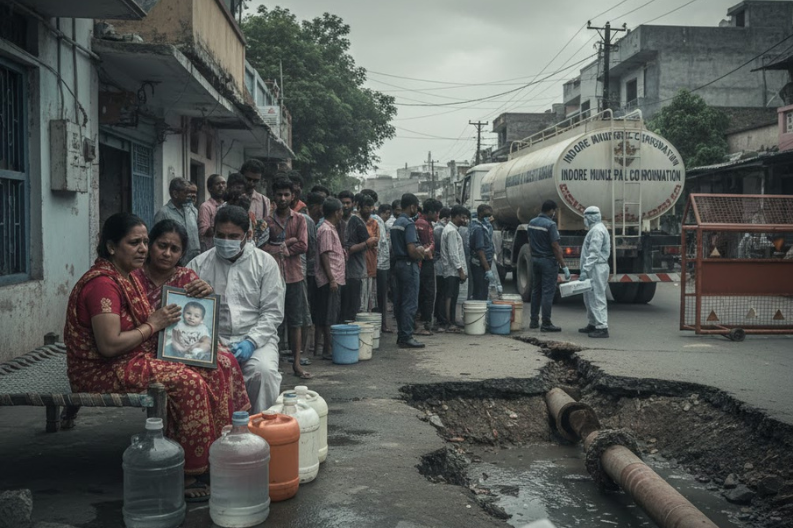
A devastating water contamination crisis has struck Indore, Madhya Pradesh, where indore contaminated water kills 9 people, including a six-month-old infant. Moreover, over 200 residents remain hospitalized after drinking sewage-mixed water from municipal pipelines. The tragedy has shocked the nation, especially since Indore has been named India’s cleanest city for eight consecutive years.
What Caused the Crisis?
The contamination began when a major rupture occurred in an old Narmada water pipeline. Specifically, the leak happened directly beneath a toilet at a police check post in the Bhagirathpura area. Consequently, raw sewage seeped into the drinking water supply, causing a massive diarrhea outbreak.
Residents had complained for weeks about foul-smelling, yellowish water. However, authorities failed to take action until people started dying. Furthermore, investigations revealed that a tender to replace the aging pipeline was issued in August but remained stalled for four months due to administrative delays.
Impact on Residents
| Statistics | Numbers |
|---|---|
| Total deaths | 9 confirmed (residents claim 14) |
| People hospitalized | Over 270 |
| Patients in ICU | 32 |
| Total affected | More than 2,800 |
| Households surveyed | Nearly 8,000 |
Health officials have examined approximately 40,000 people since the outbreak began. Additionally, 26 water samples tested positive for severe bacterial contamination. The victims include six women and tragically, a six-month-old boy who died after consuming milk mixed with the contaminated water.
Government Response and Actions
Chief Minister Mohan Yadav immediately took action after the crisis escalated. He ordered the dismissal of a sub-engineer and suspended both a zonal officer and an assistant engineer. Subsequently, he announced compensation of two lakh rupees for families of the deceased.
The government has also directed:
- Free treatment at all private hospitals for affected patients
- Distribution of chlorine tablets for water purification
- Door-to-door screening by medical teams
- Supply of clean water through tankers
- Comprehensive audit of water pipelines across the state
Court Intervention
Meanwhile, the Madhya Pradesh High Court took suo motu notice of the crisis. A Public Interest Litigation (PIL) argued that the failure to provide safe drinking water violates the fundamental right to life under Article 21. The court demanded a detailed status report by January 2, 2026.
Political Controversy
During a visit to the affected area, Cabinet Minister Kailash Vijayvargiya sparked controversy. When journalists questioned why only junior officials faced punishment, he used objectionable language on camera. Later, he apologized on social media, claiming exhaustion and grief led to his outburst.
Key Lessons from This Tragedy
This crisis highlights critical failures in municipal maintenance. Despite Indore’s reputation as India’s cleanest city, invisible infrastructure problems went unnoticed. Therefore, true cleanliness must include safe underground systems, not just visible street cleanliness.
The Indore contaminated water kills 9 tragedy serves as a wake-up call for all Indian cities. Regular pipeline maintenance and swift response to citizen complaints could prevent such disasters in the future.