The SIR 2026 voter list draft released by the Election Commission of India on December 16 has created widespread panic across West Bengal. The Special Intensive Revision (SIR) exercise aims to clean electoral rolls by removing ineligible names. However, numerous errors and deletions have left thousands of voters anxious about their citizenship status and voting rights.
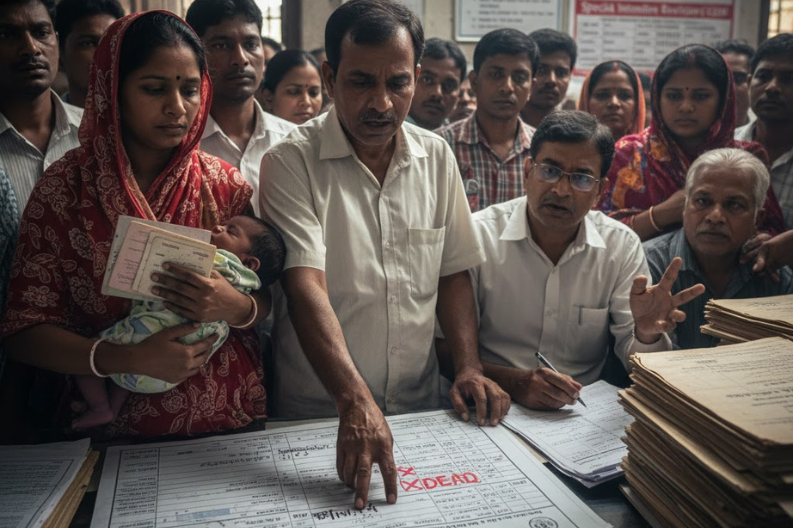
Moreover, the draft list contains shocking mistakes, including marking living people as deceased. Subsequently, Booth Level Officers face a flood of complaints from concerned citizens rushing to correct their details.
Major Issues in Draft Voter List
| Problem | Impact | Affected Communities |
|---|---|---|
| Non-mapped names | 26,053 in Bongaon Uttar alone | Primarily Matua community |
| Marked as deceased | Living voters shown as dead | Various constituencies |
| Missing names | Previously registered voters deleted | Multiple regions |
| Wrong information | Spelling errors, incorrect ages | Across Kolkata |
The Matua Community’s Fear
The Matua community, comprising millions of Dalit Hindus who migrated from Bangladesh, faces particular anxiety. The SIR exercise cross-checks current voters with the 2002 voter list. Consequently, anyone without family links to that year faces potential deletion.
Bappa Ghosh, 38, crossed into India from Bangladesh in the early 1990s as a child. His family fled religious persecution after miscreants vandalized their Kali Puja celebration. He now holds Indian documents, including PAN and Aadhaar cards. Nevertheless, he fears losing his voting rights will make him “illegal.”
“If my name doesn’t make it to the voter’s list this time, my existing identification documents will become null and void,” Ghosh explained. Therefore, he applied for citizenship under the Citizenship Amendment Act (CAA).
Required Documents for Verification
Citizens called for hearings must furnish documents from this list:
Accepted Documents:
- Birth certificate or passport
- Madhyamik (Class X) or higher educational certificates
- Residential certificate from state government organizations
- Caste certificate or forest right certificate
- Family register by the local administration
- Land or house allotment certificates
- Pre-1987 documents from the post office, bank, or LIC
Notably, PAN and Aadhaar cards are not accepted for verification. Many Matuas who migrated under adverse circumstances lack these required documents.
Cases of Errors
Lalu Rabi Das, 45, discovered the draft list incorrectly marked him as deceased. Shocked, he immediately approached his Booth Level Officer to correct this mistake. Similarly, many other voters found wrong information about themselves, including missing surnames and incorrect ages.
Anjana Bala, 38, crossed into India illegally in 2004 to escape persecution. She holds Indian documents but fears applying for CAA citizenship might lead to deportation. Her three children, born in India, have voter ID cards. However, she worries official declaration of Bangladeshi origin could jeopardize their future.
Political Responses
Chief Minister Mamata Banerjee vowed to protect Matua rights. Meanwhile, TMC’s Abhishek Banerjee criticized the BJP’s narrative about infiltrators, calling it baseless and defaming to “ten crore Bengalis.”
CPM’s Md Salim accused both the BJP and the Trinamool of exploiting the community for electoral gains. “The Matua community was used as a ladder to achieve power,” he stated. “Once their objectives were achieved, the community was abandoned.”
What Happens Next?
The Election Commission typically provides mechanisms for corrections before publishing final rolls. Citizens can submit claim forms and attend hearings to address discrepancies. However, the tight timeline creates additional pressure on both voters and officials.
Political analyst Suman Bhattacharya noted that Matuas influence 18 Assembly constituencies. The SIR 2026 voter list complications could significantly impact electoral outcomes, particularly affecting the BJP’s prospects while benefiting the TMC in the upcoming elections.